
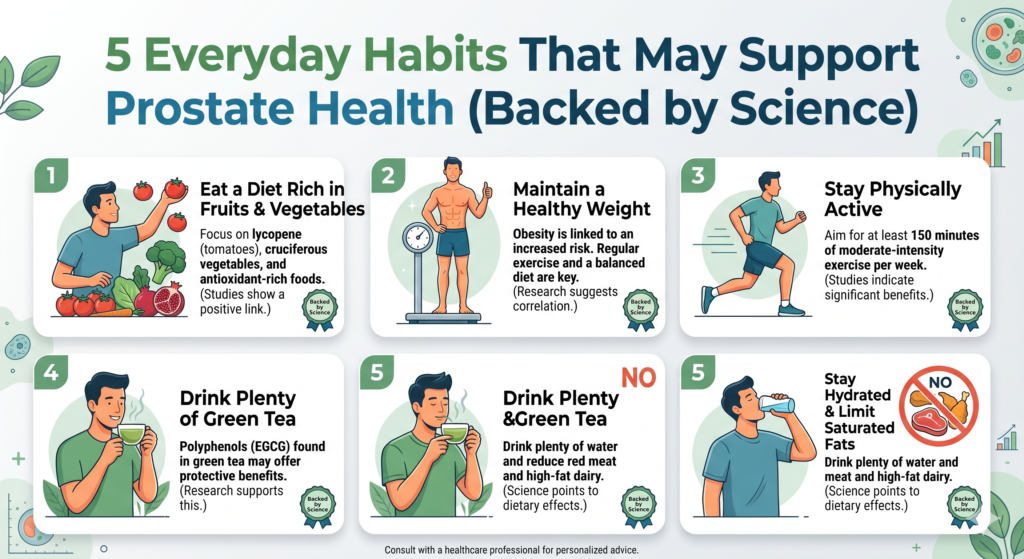
5 Everyday Habits That May Support Prostate Health :Your prostate is a small gland with a big job. It produces fluid that nourishes and transports sperm. But as you age, it can become a source of big problems – frequent bathroom trips, weak urine flow, and even cancer.
The good news is that you don’t need expensive supplements or complicated treatments to keep your prostate healthy. Small, everyday habits – backed by real science – can make a real difference.
Here are five simple habits you can start today to support your prostate health for years to come.
1. Eat More Tomatoes (and Cook Them)
You’ve probably heard that tomatoes are good for you. But did you know they’re especially good for your prostate?
Tomatoes contain a powerful antioxidant called lycopene. It’s what gives tomatoes their red color. Studies show that men who eat more lycopene have a lower risk of prostate cancer.
Here’s the science: A 2014 review of 26 studies found that high lycopene intake was linked to a 17% lower risk of prostate cancer. Another study found that men who ate two or more servings of tomato sauce per week had a 23% lower risk of prostate cancer compared to those who ate less than one serving per month.
The cooking trick: Cooking tomatoes actually makes the lycopene easier for your body to absorb. So tomato sauce, tomato paste, and even ketchup (look for low-sugar versions) are great choices.
How to do it:
- Add tomato sauce to your pasta once or twice a week
- Cook a homemade tomato soup
- Roast cherry tomatoes with olive oil and garlic
- Add a spoonful of tomato paste to stews and chili
Other lycopene-rich foods: Watermelon, pink grapefruit, guava, and papaya also contain lycopene, just not as much as cooked tomatoes.
2. Drink Green Tea (Regularly)
Green tea has been called a superfood for good reason. It’s packed with antioxidants called catechins, especially one called EGCG.
Research suggests that EGCG may help slow the growth of prostate cancer cells and reduce inflammation in the prostate. A 2017 review of studies found that men who drank the most green tea had a lower risk of prostate cancer compared to those who drank the least.
How much to drink: Most studies show benefits with 3‑5 cups per day. But even one cup a day is better than none.
How to do it:
- Replace one cup of coffee with green tea
- Keep a pitcher of iced green tea in your fridge
- Try matcha (powdered green tea) for a more concentrated dose
Pro tip: Brew your green tea for 2‑3 minutes, not longer. Over‑brewing makes it bitter and doesn’t add more benefits.
3. Move Your Body (Every Day)
You don’t need to run a marathon. You don’t need to lift heavy weights. But you do need to move.
Regular physical activity is one of the most powerful things you can do for your prostate. Exercise helps:
- Reduce inflammation throughout your body
- Maintain a healthy weight (obesity is a risk factor for BPH and prostate cancer)
- Improve circulation, including to your pelvic area
The science: A 2021 study found that men who walked regularly had a 25% lower risk of developing BPH symptoms. Another study showed that men who exercised vigorously for at least three hours per week had a 61% lower risk of dying from prostate cancer.
How much is enough: Aim for at least 30 minutes of moderate activity most days of the week. That could be:
- A brisk 30‑minute walk
- 20 minutes of jogging
- 30 minutes of gardening or yard work
- 30 minutes of swimming or biking
The best exercise for your prostate: Walking, jogging, and other weight‑bearing exercises may be particularly helpful because they reduce pressure on the pelvic area compared to cycling (which can sometimes irritate the prostate).
4. Reduce Stress (It’s Not Just in Your Head)
Chronic stress doesn’t just make you feel tired and irritable. It can also affect your prostate.
When you’re stressed, your body produces more of the hormone cortisol. High cortisol levels can:
- Increase inflammation
- Lower your immune function
- Disrupt hormone balance, including testosterone
The science: A 2015 study found that men with high stress levels were more likely to have BPH symptoms. Other research suggests that stress management may improve urinary symptoms in men with an enlarged prostate.
How to reduce stress:
- Deep breathing: Take 5 minutes in the morning and evening to breathe slowly and deeply
- Walk outside: Even 10 minutes in nature can lower stress hormones
- Talk to someone: Sharing your worries with a friend or family member helps
- Get enough sleep: Aim for 7‑8 hours per night
- Try meditation: Apps like Calm or Headspace make it easy to start
The simplest stress‑buster: Take three deep breaths right now. Breathe in for 4 seconds, hold for 4 seconds, breathe out for 6 seconds. Repeat three times. You’ll feel a difference immediately.
5. Get Regular Checkups (Don’t Wait for Symptoms)
This habit doesn’t require any special effort, but it’s the most important one on this list.
Prostate problems often have no early symptoms. By the time you notice something wrong, the issue may have progressed.
What to do:
- Starting at age 40: Talk to your doctor about your prostate health and risk factors (family history, race, etc.)
- Starting at age 45‑50: Discuss PSA (prostate‑specific antigen) blood testing with your doctor
- If you have symptoms: Don’t wait. See your doctor.
What is a PSA test? It’s a simple blood test that measures a protein produced by your prostate. High levels can indicate prostate issues, including BPH, infection, or cancer. It’s not perfect, but it’s the best screening tool we have.
What about the digital rectal exam (DRE)? Your doctor inserts a gloved finger into your rectum to feel the back of your prostate. It takes about 10 seconds and can detect hard or lumpy areas that might indicate cancer. Yes, it’s uncomfortable. But it’s also quick and could save your life.
Know your risk factors:
- Age: Risk increases after 50
- Family history: If your father or brother had prostate cancer, your risk doubles
- Race: African American men have the highest risk of prostate cancer
The bottom line: Don’t wait for symptoms. Talk to your doctor. Get screened. It’s the single best thing you can do for your prostate.
Bonus Habit: Cut Back on Late-Night Fluids
If nighttime bathroom trips are already bothering you, this bonus habit can help.
Drinking large amounts of fluid in the 2‑3 hours before bed can make you wake up more often to urinate. This is especially true for caffeinated or alcoholic drinks, which are diuretics (they make you produce more urine).
What to do:
- Stop drinking fluids 2‑3 hours before bedtime
- Avoid caffeine and alcohol in the evening
- If you’re thirsty, take small sips rather than a full glass
This won’t fix an enlarged prostate, but it can help you sleep better while you work on other habits.
7. Frequently Asked Questions (FAQ)
Q: Can these habits reverse an already enlarged prostate?
A: These habits are for prevention and support, not treatment. If you already have BPH symptoms, see your doctor. But these habits can still help manage symptoms and slow progression.
Q: How long until I see results?
A: Prostate health is a long game. Some benefits (like better sleep from reducing late‑night fluids) are immediate. Others (like the protective effects of lycopene) build up over years.
Q: Are there foods I should avoid?
A: Some studies suggest that high intake of red meat, high‑fat dairy, and processed foods may increase prostate risk. Focus on adding good foods rather than obsessing over eliminating everything.
Q: Can supplements replace these habits?
A: No. Supplements can help, but they’re not a substitute for a healthy lifestyle. Always talk to your doctor before starting any supplement.
Q: Does masturbation affect prostate health?
A: Some studies suggest that frequent ejaculation (21+ times per month) may lower prostate cancer risk. But the evidence is mixed, and it’s not a proven prevention strategy.
Q: What’s the single most important thing I can do?
A: Get regular checkups and PSA tests starting at age 45‑50 (or earlier if you have risk factors). Early detection saves lives.
8. Call to Action (CTA)
Start with just one of these habits today. Add a serving of cooked tomatoes to your dinner. Take a 10‑minute walk after lunch. Or call your doctor to schedule that prostate checkup you’ve been putting off. Small changes add up. Your future self will thank you.
Read also
Potent Stream Review 2026: Natural Prostate Health and Urinary Support

Sanjay Singh is an affiliate marketer and health product researcher with over three years of experience evaluating supplements, wellness tools, and natural health solutions. He spends his time analyzing ingredient profiles, studying customer feedback, and separating genuine products from marketing hype. His goal is to help readers make informed, confident choices for their health—without the guesswork.